
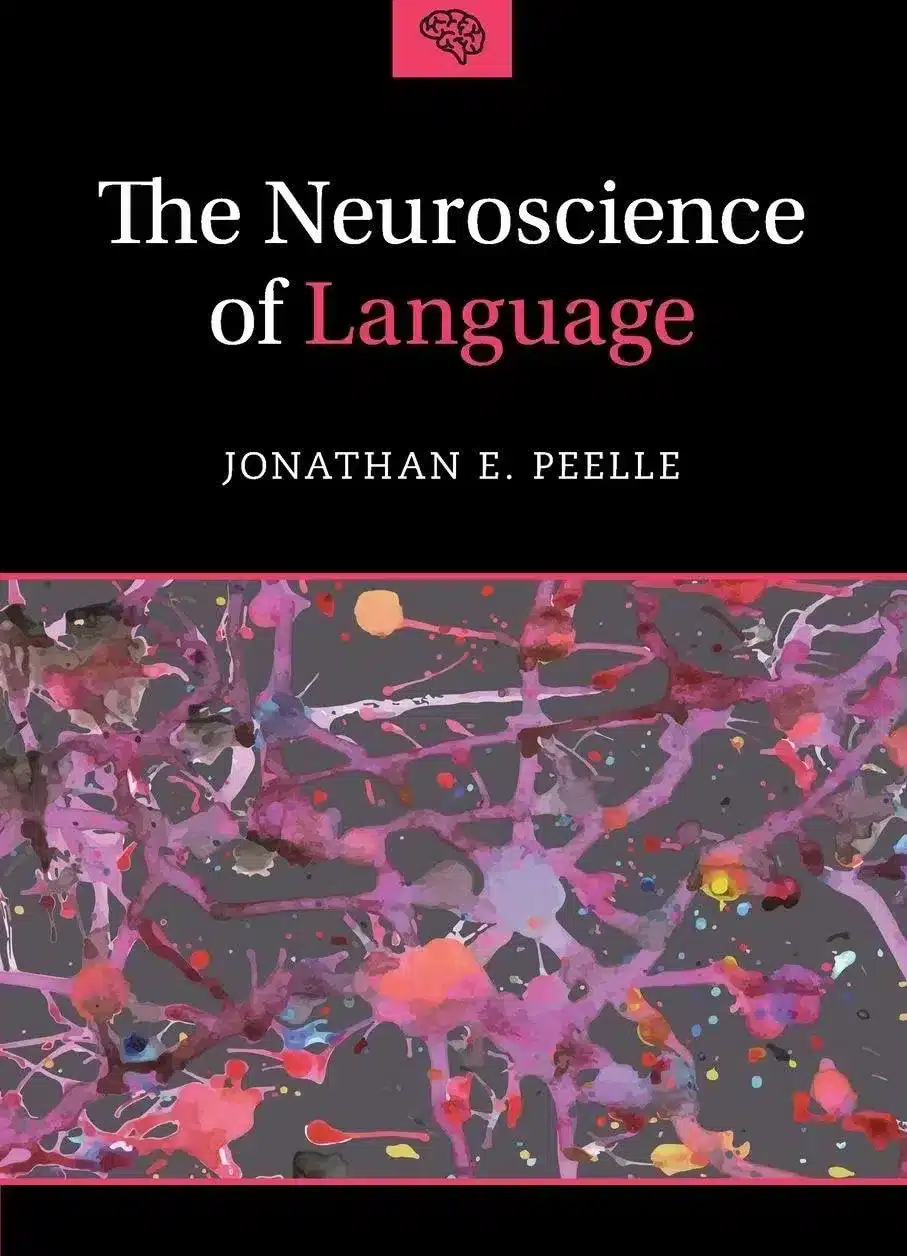
The Neuroscience of Language – Test Bank by Jonathan E. Peelle
The Neuroscience of Language Test Bank by Jonathan E. Peelle offers a detailed, research-driven collection of exam questions designed for university courses in neurolinguistics, cognitive neuroscience, psycholinguistics, and language science. Built to support the textbook’s scientific approach, this test bank helps students understand the neural basis of language, the architecture of the cortical language networks, and the mechanisms that shape how the brain processes speech, meaning, and communication.
A Complete Assessment Resource for Language and the Brain
This test bank provides high-quality questions across every major topic in the neuroscience of language. Learners explore how neural systems encode linguistic information and how language comprehension neuroscience is reflected in brain signals, imaging studies, and cognitive models. Each chapter includes questions that examine speech perception neuroscience, language production neuroscience, neural encoding of language, and the cognitive neuroscience of communication. The structure is ideal for undergraduate and graduate-level instruction.
Instructors can rely on these exam items to evaluate understanding of core concepts such as neurolinguistics, psycholinguistics, language processing in the brain, and the roles of cortical and subcortical structures. Each question is built to encourage accurate reasoning and a deep grasp of how neural circuits contribute to language.
Scientific Coverage Across All Linguistic Levels
The Neuroscience of Language test bank spans the full range of topics that shape contemporary cognitive neuroscience. Students will engage with questions covering:
- Neural mechanisms of speech perception: auditory cortex, phoneme encoding, acoustic–phonetic mapping.
- Language comprehension: semantics, syntax, sentence processing, integration, and prediction.
- Language production systems: planning, sequencing, motor control, articulation.
- Brain and language networks: dorsal and ventral pathways, connectivity, lateralization.
- Neural basis of meaning and structure: semantic processing, syntactic parsing, conceptual integration.
- Neurobiology of bilingual language processing and cross-linguistic differences.
- Aphasia and language impairment neuroscience: lesions, recovery, compensation, and plasticity.
This wide scope allows programs in linguistics, speech-language sciences, psychology, and neuroscience to adopt the test bank as a strong, reliable examination tool.
Long-Form and Applied Questions for Deeper Understanding
What makes this resource especially valuable is its inclusion of cognitive neuroscience language test questions that go beyond basic recall. Many items require interpretation of diagrams, functional imaging of language, and EEG/MEG language processing data. Students analyze activation patterns, examine neural timing, and reason through competing theoretical accounts. This offers an ideal bridge between textbook concepts and real experimental evidence.
Advanced learners will also appreciate the inclusion of neurocognitive language models test items, questions on speech and language neuroscience, and problem-solving tasks involving hemispheric specialization, hierarchical processing, and predictive coding. These questions build confidence for higher-level coursework and research-oriented study.
Clear Structure and Instructor-Ready Format
The test bank’s layout mirrors the organization of the textbook, making it simple for instructors to integrate questions into lectures, online platforms, and exams. Each set of questions provides a careful balance between conceptual clarity and scientific accuracy. This makes the resource especially useful for courses in:
- Neuroscience of language
- Neurolinguistics
- Cognitive neuroscience
- Psycholinguistics
- Speech and language sciences
Instructors can also draw from the neuroscience test bank for university courses to design practice quizzes, assignments, and lab assessments. Because the questions highlight both foundational theories and cutting-edge research findings, the material works well in both introductory and advanced settings.
Focus on Key Concepts in Brain–Language Research
Across the test bank, students engage with the most influential ideas in modern brain-language science. These include:
- The architecture of the cortical language networks
- Neural signatures of semantics and syntax
- How the brain supports speech perception and speech production
- The contribution of predictive mechanisms to language processing
- Brain responses measured using EEG, MEG, fMRI, and lesion methods
- The neurobiology of language disorders, processing deficits, and recovery
Questions highlight both classic studies and recent discoveries in language neuroscience, ensuring learners gain a balanced understanding of theories, data, and methodological approaches.
Ideal for Students, Researchers, and Instructors
The test bank for The Neuroscience of Language by Jonathan Peelle is suited for students preparing for exams, instructors building assessments, and researchers seeking structured review materials. Whether used as a study tool or a complete exam resource, it enables learners to practice high-level reasoning across neurolinguistics, cognitive modeling, and experimental language science.
Conclusion
The Neuroscience of Language Test Bank provides a clear, rigorous, and carefully structured learning tool for understanding how the brain enables language. Through questions covering speech, comprehension, production, semantics, syntax, neural pathways, imaging, electrophysiology, bilingual processing, and aphasia neuroscience, this resource equips students with the knowledge needed to excel in modern cognitive neuroscience and linguistic study.



Reviews
There are no reviews yet.